Business Proposal Google Slides Template: A Practical Guide to Choosing and Using Presentation Templates That Work
When you need to put together a professional business proposal, the last thing you want is to spend hours wrestling with layout, formatting, or design inconsistencies. The Business Proposal Google Slides Template promises a clean, contemporary way to present your work without starting from scratch. But even the best template can lead to frustration if you approach it the wrong way. Whether you are a small business owner pitching a new client, a freelancer sending a project brief, or an educator presenting a funding request, understanding what this template offers and where people commonly stumble will save you time and help your proposal stand out for the right reasons.
What Makes a Business Proposal Google Slides Template Useful
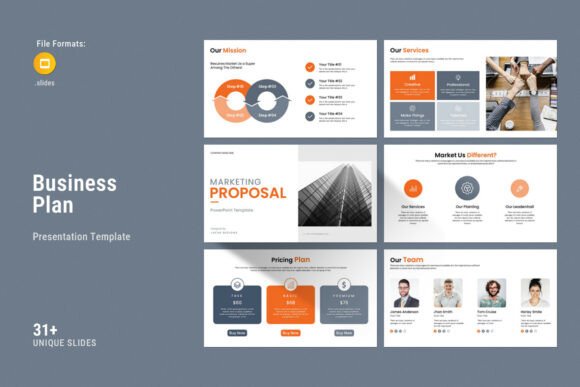
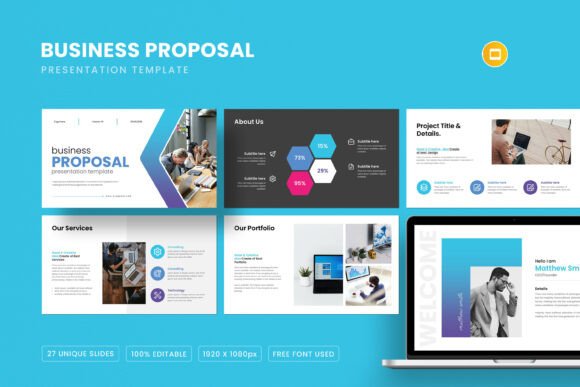
A well-designed presentation template is more than just a collection of slides. It is a structured framework that guides your audience through your message while keeping your brand consistent. The Business Proposal Google Slides Template includes 27 slides, master slide layouts, vector icons, infographics, tables, and photo layouts that you can drag and drop images into. It works on both Apple and Windows systems, uses a 16:9 full HD ratio at 1920x1080 pixels, and allows easy color changes. These features are designed to help you focus on your content rather than the mechanics of formatting.
What draws many people to a template like this is the promise of speed and polish. You can drop in your company profile, key figures, and value proposition without needing advanced design skills. The free font links and help file provide additional support, and the designer offers real support if you run into questions. But the real value comes when you use the template intentionally rather than treating it as a quick fill-in-the-blank solution.
Common Mistakes People Make with Presentation Templates
Even a powerful template can produce mediocre results if you fall into certain traps. Here are the most common mistakes I have seen, along with practical ways to avoid them.
Mistake One: Treating Every Slide as a Data Dump
One of the biggest misunderstandings about the Business Proposal Google Slides Template is that because it includes infographics, tables, and diagrams, you should fill every available space with information. Slides become overcrowded, and your audience struggles to find the key point. The template is designed to help you simplify, not to encourage clutter.
Instead of copying an entire spreadsheet into a table, pull out the three numbers that matter most. Use the infographic layouts to show a single trend or comparison. The creative photo layouts work best when they support one main idea per slide. If you find yourself adding bullet points to a slide that already has a strong visual, ask yourself whether that visual already tells the story. Often, less really is more.
Mistake Two: Ignoring the Master Slides
The template includes master slide layouts, which allow you to set a consistent header, footer, and background across all slides. Many people skip this feature and manually adjust fonts, colors, and spacing on each slide. The result is a presentation that looks slightly uneven, especially when viewed on a large screen. The inconsistency distracts from your message and makes your proposal feel less professional.
Before you start adding content, open the master slide view and set your fonts, colors, and logo once. This small step ensures that every slide you add later follows the same structure. If you need to change the color scheme later, you can do it from the master slide instead of editing twenty slides individually. The easy color change feature works much better when applied at the master level.
Mistake Three: Using Low-Quality or Mismatched Images
The template allows you to drag and drop images easily, but the placeholder images you see in the demo are not included. Some users replace them with photos that are too small, poorly lit, or unrelated to the content. A pixelated image or a generic stock photo that does not match your brand can undo the professionalism of the entire slide.
Always use high-resolution images that are at least 1920 pixels wide to match the full HD ratio. If you do not have original photos, use reputable stock photo sites that offer images with licensing for business use. Crop and adjust the images to fit the layout, and make sure they reinforce your message rather than just decorating the slide. A photo of your team, your product, or your workspace will always feel more authentic than a generic shot of people shaking hands.
Mistake Four: Overlooking the Importance of Typography
The template uses a free font that is linked in the help file. Some people either skip installing that font or replace it with a font that does not pair well with the design. Others use too many font sizes or styles on a single slide, creating a chaotic look. Typography sets the tone for your proposal, and getting it wrong can make your content feel amateurish.
Stick to one or two fonts maximum. Use the free font recommended in the help file, or choose a clean, readable alternative that matches your brand. Keep body text at a readable size, typically 18 to 24 points for slides, and reserve larger sizes for headlines. Use bold or color sparingly to highlight key terms, not to decorate entire sentences.
What to Check Before You Start Using the Template
To get the most out of the Business Proposal Google Slides Template, take a few minutes to review these practical points before you begin.
- Check compatibility: The template works on both Apple and Windows, but make sure you are using a supported version of Google Slides. If you plan to download it for offline use, confirm that your software allows the advanced features like master slides and vector icons.
- Review the help file and license: The template includes a help file with instructions and font links. Read through it. It will save you time troubleshooting later. Also, note that the images in the demo are not included, so plan to source your own visuals.
- Plan your content structure: Before you start dragging and dropping, outline your proposal. Decide which slides you actually need from the 27 available. You do not have to use every slide. Pick the ones that support your story, and hide or delete the rest.
- Test color changes early: The easy color change feature is powerful, but test it on a few slides first to make sure the new palette works with your images and text. Some colors may reduce readability when applied to certain backgrounds.
- Check font availability: If the free font linked in the help file is not available on your system, install it before you start editing. Otherwise, Google Slides may substitute a font that breaks your layout.
How to Use the Template for Maximum Impact
A business proposal is ultimately about persuasion. Your goal is to communicate your value clearly and confidently. The Business Proposal Google Slides Template gives you the structure, but your content and delivery make the difference. Use the diagram slides to map out your process or timeline. Let the infographics highlight key statistics that support your proposal. The vector icons can help break up text-heavy slides and make abstract concepts more concrete.
Keep your audience in mind. If you are presenting to a group of executives, prioritize the slides that show financial projections, timelines, and ROI. If you are presenting to a creative team, lean more on the visual layouts and case study examples. The template adapts to different contexts, but only if you tailor it to your specific audience.
Also, practice your presentation in slideshow mode before you send or present it. Check that all images display correctly, that text fits within each slide, and that the transitions feel smooth. A quick walkthrough before you share the file can catch small issues that might otherwise distract your viewers.
Why This Approach Matters for Your Business Proposal
Choosing a template is only the first step. The way you use it reflects your attention to detail, your understanding of your audience, and your ability to communicate clearly. A proposal that looks polished but tells a confusing story will not persuade anyone. Conversely, a proposal that is well-organized, visually clean, and easy to follow builds trust and credibility.
The Business Proposal Google Slides Template offers a solid foundation, but you bring the substance. Invest time in selecting the right images, refining your key messages, and customizing the layout to your brand. When you do that, the template stops being a generic starting point and becomes a tool that elevates your work.
Support from the designer is available if you need it, but the best outcomes come from understanding the template's strengths and using them deliberately. Avoid the common mistakes of overcrowding, ignoring master slides, using poor images, and neglecting typography. Instead, plan your content, customize the design, and test everything before you present. Your proposal will be stronger for it, and your audience will notice the difference.
Whether you are a freelancer pitching your services, a startup seeking investment, or a department head requesting budget approval, the way you present your ideas matters just as much as the ideas themselves. A professional template like this one can help you look credible and prepared, but it is your thoughtful use of it that will leave a lasting impression.