Products Recycling, Events Cyclicality
If you have ever watched a whirlwind pick up leaves, spin them in a tight loop, and then scatter them across a field, you have seen a perfect metaphor for how materials and moments move through our lives. Products recycling, events cyclicality is that same spiral in human terms — the idea that things we use and the events we experience do not end at a single point. They loop back, transform, and feed into something else.
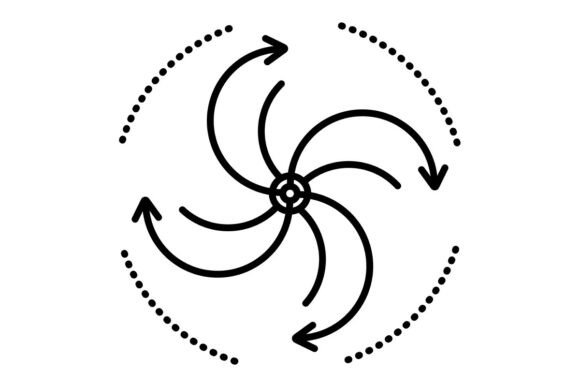
That looping arrow icon you see in sustainability infographics or process diagrams — the clean black line spiral with arrows pointing inward and outward — captures exactly this. It is not just a symbol. It is a practical way to think about how you manage resources, plan projects, and even make sense of your calendar.
What Products Recycling, Events Cyclicality Actually Means
Products recycling refers to the process of taking an item at the end of its useful life and turning it into something new. Events cyclicality describes how similar situations, seasons, or patterns repeat over time — think of annual product launches, seasonal sales, or even the way a creative project goes through research, creation, review, and revision.
Together, these two ideas form a cyclical model where nothing is truly wasted. A cardboard box becomes a new box. A product launch feeds insights into the next launch. A failed campaign teaches you what to do differently when the same season rolls around again next year.
Unlike a straight line that goes from A to B and stops, a spiral keeps going. Each loop is similar to the last, but it is not identical. You are a little higher — or maybe a little deeper — every time you come around.
The Whirlwind and the Hurricane: Nature's Recycling Systems
A whirlwind is small, fast, and local. A hurricane is massive, slow-moving, and far-reaching. Both are spinning systems that recycle energy and matter. Air heats up, rises, cools, falls, and heats again. Water evaporates, forms clouds, rains down, and flows back to the ocean.
When you look at products recycling and events cyclicality through this lens, the scale becomes flexible. You can apply the same spiral thinking to a single workshop or to a company-wide sustainability initiative. The icon represents both the quick spin of a small project and the long, powerful rotation of a major annual event.
The key difference between a whirlwind and a hurricane is preparation. You can step out of a whirlwind. A hurricane requires planning, shelter, and resources. Similarly, small-scale recycling — like reusing glass jars at home — is easy to adjust. Large-scale cyclicality, like shifting a whole business to a circular model, needs a more structured approach. The same symbol works for both because the underlying flow is identical.
At Home: The Weekly Loop
Think about your kitchen. Food scraps go into compost. Compost feeds the garden. The garden produces vegetables that end up back in the kitchen. That is a closed loop. The same applies to packaging: you buy pasta in a cardboard box, the box goes into recycling, and months later it becomes a new box or a notebook.
People who track their household waste often notice patterns. Meat waste spikes on Monday after Sunday roasts. Plastic accumulates on delivery days. Recognizing these cycles lets you adjust — buy in bulk, choose reusable containers, or plan meals around what tends to rot first. That is events cyclicality at the micro level.
In Creative Work: The Revision Spiral
Writers, designers, and video editors live inside a cyclical process. You draft, review, revise, and repeat. Each pass is a loop. The spiral icon is a honest representation of creative work — you are not starting over each time. You are returning to the same material but with more clarity, better tools, or fresh perspective.
A graphic designer working on a brand identity might go through five rounds of feedback. Each round recycles previous ideas, discards what does not work, and builds on what does. That is products recycling applied to concepts rather than physical goods.
In Business: Seasonal Rhythm
Retail businesses experience events cyclicality every year: holiday rush, back-to-school, summer slowdown. Smart operators recycle their strategies. A promotion that worked in Q4 last year gets adapted for Q4 this year. Unsold inventory gets returned, donated, or broken down into raw materials.
The spiral with arrows vector icon works beautifully here. If you have ever sat in a strategy meeting drawing a circle on a whiteboard, you know exactly what I mean. You map out the cycle: plan, execute, review, recycle insights, plan again. The arrows show direction. The spiral shows progress.
Entrepreneurs and Small Business Owners
For you, products recycling and events cyclicality is a financial lever. Every time you reuse a material, you save on procurement. Every time you recycle a marketing campaign, you save on creative costs. You also reduce waste disposal fees. The spiral icon in your pitch deck signals to investors that you think long-term, not just about the next quarter.
Consider a small coffee shop. Coffee grounds get collected by a local farm for compost. The farm grows produce that the shop buys for its menu. Glass milk bottles go back to the dairy for refilling. That is three loops running simultaneously. Each one cuts cost and builds community goodwill.
Marketers and Content Creators
You deal with events cyclicality constantly. Product launches, seasonal campaigns, and content calendars all follow repeating patterns. The trick is to recycle your best performing assets. A popular blog post becomes a video script, an infographic, a podcast episode, and a social media thread. Each version is a new loop on the same spiral.
The clean outline of the spiral icon works well in your slide decks and Canva templates. It communicates continuity and efficiency without needing extra text. Your audience sees movement and progress — exactly what you want them to feel about your brand.
Educators and Trainers
Teaching is inherently cyclical. You cover a topic, assess understanding, revisit weak areas, and move forward. That is a spiral curriculum. The spiral with arrows vector icon is a visual shorthand for your teaching philosophy. Use it in handouts, presentation slides, or course platform headers to show that learning is not linear.
When you teach about products recycling, you can literally trace the path of an aluminum can from bauxite mine to store shelf to recycling bin to new can. Students remember the visual spiral better than any statistic.
Freelancers and Hobbyists
If you run a side hustle selling handmade goods, products recycling and events cyclicality affects your materials and your schedule. Fabric scraps become patchwork items. Wood offcuts become coasters. You also notice that sales spike before holidays and dip in January. You can plan your production around those cycles, making stock ahead of time and using slow periods for experimentation.
The vector icon is a simple addition to your Etsy shop banner or your portfolio website. It suggests that you think about sustainability and that your creative process has a rhythm.
App UI Designers and Developers
For you, the spiral with arrows vector icon is a practical UI element. Use it to indicate syncing, refreshing, processing, or circular workflows. It fits naturally into sustainability apps, project management tools, habit trackers, or event planning interfaces. The editable stroke means you can scale it, recolor it, and adapt it to your design system without losing clarity.
Users understand the symbol intuitively — something is loading, looping, or updating. That is events cyclicality expressed as user experience. A habit tracker app, for instance, can show a spiral for daily, weekly, and monthly streaks. Each completed loop reinforces the user's progress.
Know Your Starting Point
The spiral with arrows assumes you are moving forward. But you need to be honest about where you are right now. If your current recycling system is broken — contaminated bins, unreliable hauler, no demand for recycled material — then jumping straight to a full cycle plan will fail. Start by fixing one loop. Maybe that is just separating paper from trash. Once that works, add the next material.
Similarly, if your event planning cycle is chaotic, do not try to optimize everything at once. Pick one seasonal event. Document what happened. Use those learnings for the next iteration. The spiral grows from a tight center.
Cost vs. Benefit
Not every loop is worth closing. Sometimes the energy and money required to recycle a product or replicate an event exceed the value you get back. A small business might find that collecting and storing glass until a recycler picks it up costs more in space and labor than tossing it and buying new containers. That is okay. You chose the practical path. The spiral model works best when you align it with your resources, not someone else's ideal.
Audience and Messaging
If you use the spiral with arrows icon in branding or presentations, consider what it communicates to your specific audience. For a corporate audience, it signals efficiency and long-term thinking. For a creative audience, it suggests iteration and growth. For a general consumer audience, it implies eco-friendliness and transparency. Match the visual tone to your message. An editable stroke icon works well in minimal design contexts but may feel out of place in a dense data report.
Cultural and Local Context
Recycling infrastructure varies wildly by location. Events cyclicality differs by industry and region. A farmer's market vendor experiences cycles based on harvest seasons. A tech startup lives by product release cycles and funding rounds. The spiral symbol is universal, but your application of products recycling and events cyclicality must fit your specific environment. What works in Berlin may not work in Bangalore. Adapt the model, not the icon.
The Real Outcome: Progress, Not Perfection
The beauty of the spiral with arrows is that it celebrates motion without demanding perfection. You do not need a closed loop on the first try. You do not need to recycle everything. You do not need to predict every event cycle precisely. You just need to keep turning.
Each loop of the spiral gives you data. Each spin shows you what works and what does not. Over time, the center tightens — you waste less, plan better, and see patterns before they fully form. That is the practical payoff of understanding products recycling, events cyclicality as a natural phenomenon rather than a business buzzword.
The next time you see that clean black line vector icon — in an infographic, a presentation template, or an app interface — you will know exactly what it stands for. It is not just a circle of arrows. It is the shape of progress itself. A whirlwind that gathers, spins, and releases. A hurricane that cycles energy through a system. A simple, honest drawing of how things actually flow when you let them come back around.